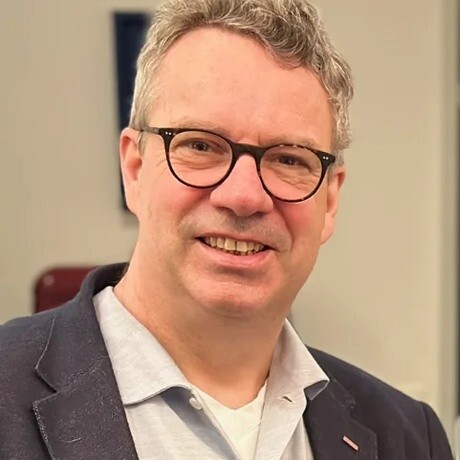
Dr. Stefan Schumacher, is Director of TES Listening Center in Hagen, Germany and represents the Archdiocese of Paderborn in helpline counseling. Internationally, Dr. Schumacher has held leading roles within IFOTES. Since 1996, he has served as a trainer, coach, and supervisor, specializing in communication and personal development.
His scientific research focused on the individual meaning in life, coupled with projects on language's influence in communication and personal development.
In addition to his professional pursuits, Dr. Schumacher has authored several publications on emotional support and communication skills.
Stefan Schumacher
Speaker
The architecture of meaning: how we humans design our meaning in life and how it develops and shapes our identity.
First speech - 10 July h.11:00
The founder of logotherapy, Viktor Frankl (1905–1997), considered the personal search for meaning to be essential to human satisfaction in life. The founder of salutogenesis, Aron Antonovsky (1923-1994), called this state of experiencing meaning a ‘sense of coherence’. This raises the question of how the human sense of coherence develops and what influence I have on it. What role do other people play in relation to my experience of meaning, and what influence could artificial intelligence have, or rather, what are the limits of AI in relation to the experience of meaning?
In this lecture, you will learn about a model that describes the construction of our subjective experience of reality and its influence on our identity: What is the significance of the perception of space and time? How do we interpret our experiences and how do we store them? What is the connection between feelings and values? What gives us humans our identity? What role do empathy and resonance play in the experience of meaning? These questions will be explored in the lecture, and considerations will be presented on the significance of the construction of reality in the search for meaning in life and the role it plays in conversation during TS support.
The human touch: the ability to form bonds on the one hand and the ability to be autonomous on the other as pivotal points for communication, touch-ability and human freedom.
Second speech - 11 July h. 16:00
What defines us as humans and keeps us healthy is our ability to form bonds and our ability to be autonomous. This apparent contradiction is the great challenge we humans face from birth. Stable attachment experiences enable us to communicate and interact; the pursuit of independence and development allows us to surpass ourselves. If one of these poles is restricted in its development, this has consequences for our ability to deal with crises and all kinds of life complications.
This lecture introduces the Theory of Attachment (John Bowlby and Mary Anisworth) and discusses its implications for life management from a psychological and neurobiological perspective – including which typical disorders of attachment and autonomy behaviour can manifest themselves in adulthood. In a second step, the consequences for TES support are derived and what is important for crisis support from the perspective of attachment theory. Basic psychological needs (Klaus Grawe) play a central role in this. Against this background, reference is also made to the opportunities and limitations of using AI in crisis support.