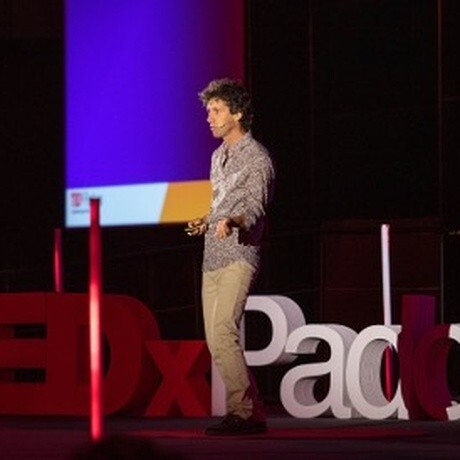
Roberto De Vogli is an Associate Professor in Global Health and Psychology of Power at the University of Padova and Visiting Professor at the School of Advanced Studies, University of London.
He has published numerous articles in peer-reviewed journals including Nature, The Lancet and British Medical Journal, and two books. He has two new books coming out in 2025: “Selective Empathy: The West Through the Gaze of Gaza” (Brill, Critical Social Studies & Haymarket, Books for Changing the World) and “Wellbeing and UN Sustainable Development Goals" (Edward Elgar).
Roberto De Vogli
Speaker
Beyond Empathy’s Borders: Embracing Our Shared Humanity
Moral and emotional double standards hinder cooperation and cause humanitarian crises. Based on the book “Selective Empathy”, this presentation explains how the unequal expression of solidarity with certain war victims calls into question the universality of the values that the international community claims to uphold. The genocide in Gaza, in particular, has become a litmus test and a moral blind spot for the West. It has revealed an international community that provides support and sanctions based on geopolitical interests and cultural biases, creating a hierarchy of suffering in which some victims are considered more deserving of compassion than others. This crisis of selective empathy, whereby compassion is extended to certain lives while denied to others, undermines the international community's credibility as the guardian of universal values.
At a time when international cooperation, equality and solidarity are not merely essential values, but existential ones, the moral and emotional divide between the West and the Rest is particularly concerning. Humanity has never been so close to catastrophe. The Bulletin of Atomic Scientists' "Doomsday Clock" now stands at just 85 seconds to midnight. Initially set at seven minutes to midnight in 1947, it now reflects a world teetering on the brink of the abyss, primarily due to the risk of nuclear war.
Drawing on insights from psychology, evolutionary biology, and moral philosophy, this presentation explores human nature. Are we irrevocably bound by tribal instincts, or can we develop empathy that transcends borders? Is a transformation of consciousness and identity based on universal compassion and solidarity possible? Is it realistic to imagine a world without foreigners and enemies, in which everyone can identify with the whole of humanity?
“Selective Empathy” challenges prevailing narratives and calls for a new solidarity based on universal empathy, social justice and emotional decolonization. By highlighting acts of solidarity, resistance, and global compassion, the book invites us to reconsider relations between nations and individuals, favoring a cosmopolitan ethic that affirms the equal value of every human life. In an era where “the winds of war” are influencing national and international policies, an identity that transcends flags and tribal affiliations can offer moral inspiration, a glimmer of imagination “beyond borders”, and the possibility of a collective psycho-political shift towards deeper, more widespread humanitarianism.