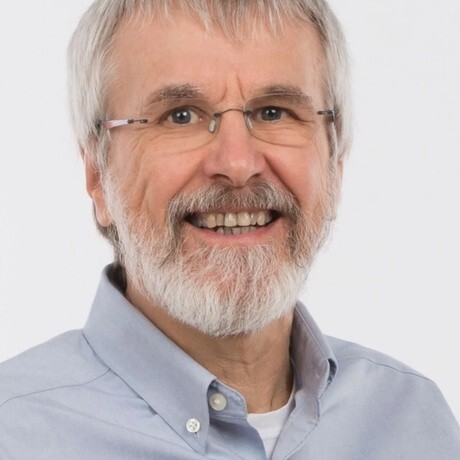
Martin Franken: Doctorate in philosophy, education and sociology; training as a focusing therapist in Würzburg (DAF), further training in numerous therapeutic methods, especially trauma therapy, including with Peter Levine and Luise Reddemann.
Publications: Monograph on Kant and Fichte „Transzendentale Theorie der Einheit und systematische Universalontologie“, Amsterdam and Atlanta, 1993, as well as numerous articles on focusing therapy and mindfulness practice.
Activities: Practice for life counselling and focusing therapy in Dorweiler, end-of-life care worker (hospice), lectures, seminars and moderation.
Martin Franken
Speaker and workshop leader
How can we offer comfort?
Speech
We all need comfort because, as human beings, we are always suffering creatures. Especially when suffering is deep and persistent, we depend on the comfort of others because our existence is affected by something that cannot be put right or healed. Such comfort comes primarily through a deep connection with another person. In this process, the other person is addressed in their deepest potential as a human being: as a compassionate being who empathetically and mindfully takes in the suffering of the other, feels it, endures it and thus allows it to be there with them and carries it out. This comforts, calms and alleviates the pain.
In my lecture, I would also like to discuss possibilities for self-comfort through mindfulness, self-compassion, self-acceptance and self-care.
How we can open up a healing space for people who are suffering
Workshop
When we encounter people who are suffering deeply and persistently, when it is literally a matter of life and death, we often find ourselves at a loss for words. We cannot say to someone who has lost a loved one, who is suffering from an incurable illness, or who is despairing of life: „It will be alright.“ However, we can approach these people in a special way: sincerely, acknowledging their suffering, with compassion and mindful presence. In this way, we open up a space for the other person and allow them to truly be there. In this workshop, I will lead a few exercises to demonstrate, how such a presence can be achieved, and how it can have a healing effect that is experienced by the other person as beneficial and comforting.